
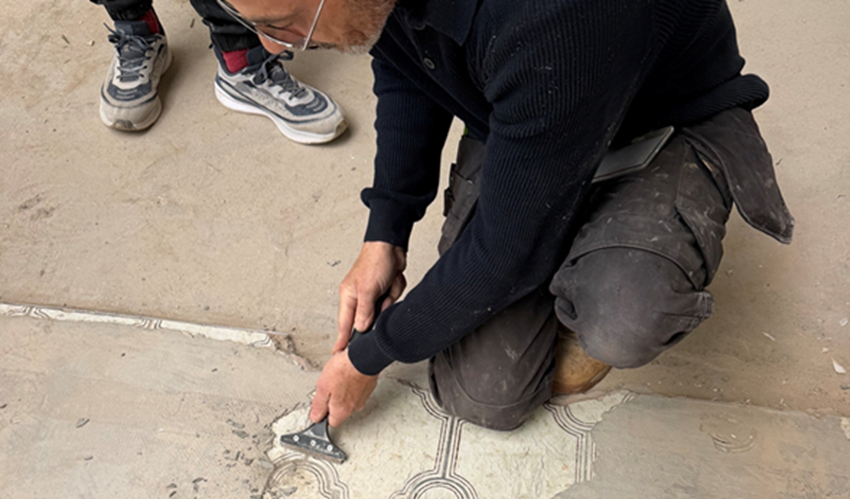
We are still finding surprises, still discovering new clues to the house’s early history. This week early wallpaper and tiles from an original walkway were uncovered and as the East entrance was extended the original Basement access was revealed.
A few scraps of early wallpaper have been revealed, hidden for an unknown number of years under tiles and layers of paint and later wallpaper.
A William Morris design of large scrolling acanthus leaves, designed in 1874 has been found while preparing one of the original rooms for plastering.
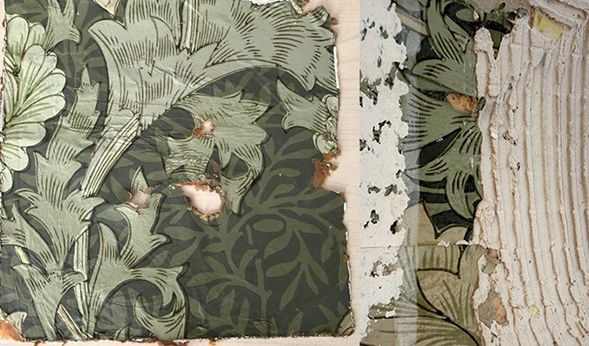
Morris’ “Acanthus” wallpaper style emerged during the Arts and Crafts movement in late 19th-century Britain. Morris rejected industrial mass production and promoted handcrafted design inspired by nature and medieval craftsmanship which required around 30 woodblocks for printing. This was considered one of Morris & Co.’s more expensive wallpapers at the time. We are told that even damaged fragments can have research or decorative value, especially if provenance is known.
Interestingly, Victorian green wallpapers sometimes contained arsenic-based pigments. Morris wallpapers have occasionally been associated with this era’s arsenic pigment controversy. To be careful, any areas will not be sanded or scraped.
Also, with preparation for tiling in a new West Entrance to the house we uncovered tiles dating back to the same era as the wallpaper, suggesting that there was a makeover when the house changed hands. We are hoping that the tiles, hidden under a layer of levelling concrete, have been protected.
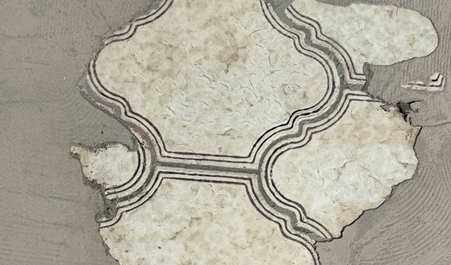
The tiles appear to be an original geometric design from the late Victorian period, most likely dating from about 1890. The geometric curved-line motif is typical of entrance halls and passages of houses of that era. This fits with what is already known as the original house had a covered walkway around the outside of the house as shown from the picture below from 1898 where the new entrance is located.
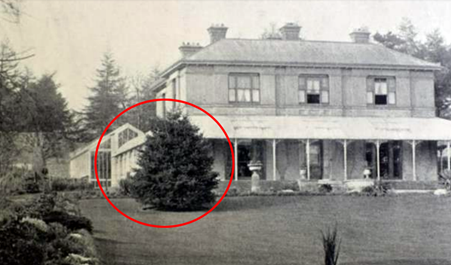
Once plastering work to the new entrance is completed, we will seek to uncover and preserve whatever remains of the tiles, making this a feature. So little of the original Victorian House remains with unsympathetic remodelling phases in the 1930s, 1950s and 1970s.
The Cobdown Folly
With the extension of the East entrance, discovered under flagstones and debris, the old access and window to the original basement was uncovered. Given the choice of losing this again or making a feature the choice of preserving another part of the original part of the house was an easy one.
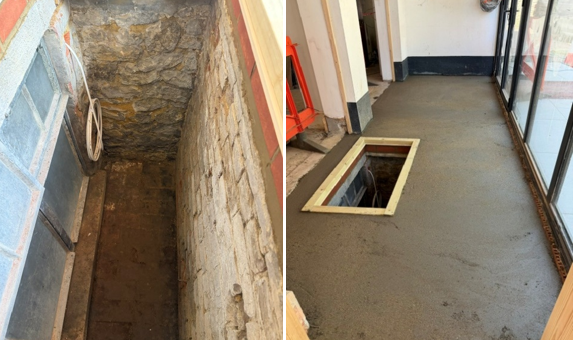
With a glass walkway and lighting this will be an interesting feature for the East entrance. We will share more when the flooring, lighting and glass has been fitted.